MEACA Charts a Communications Strategy Built With the People It Serves
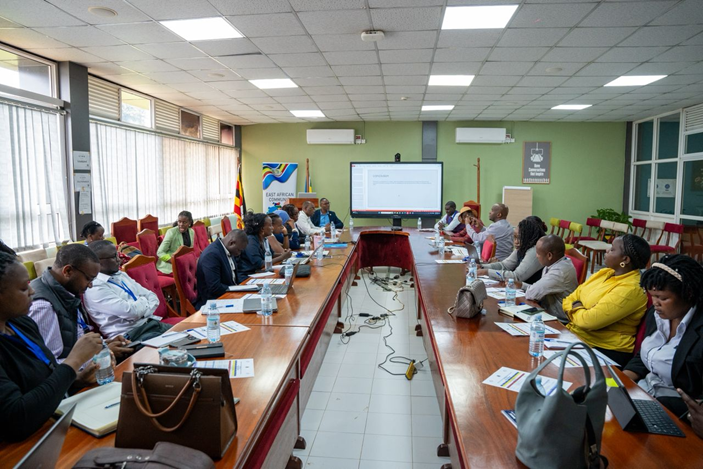
When the Ministry of East African Community Affairs opened its Communications Engagement at the National ICT Innovation Hub in Nakawa from19 to 21 May2026, the goal was simple to state and hard to achieve, to build a Communications Strategy that Ugandans would actually notice.
Day One belonged to MEACA's own staff. Ms. Daisy Nakandi of the Ministry of ICT and National Guidance walked participants through the new National Communication Policy, explaining that government messaging had long suffered from delay, poor coordination, and inconsistency. Commissioner Leo Kizito Ojara pushed the conversation further, raising concerns about confidentiality and online safety, and urging the Ministry to explore AI tools such as real time translation for regional engagements involving bodies like the African Union. By the end of the day, staff had agreed on concrete steps, among them a MEACA brand manual and closer coordination between the Communications Unit and the IT team.
Day Two widened the circle to thirty eight institutions across government. Under Secretary Kaima Godfrey, standing in for the Permanent Secretary, told the room that EAC integration could not remain trapped in Summit communiqués, it had to reach traders, students, and job seekers as real, tangible benefit. A representative from Parliament noted that decisions made in Arusha rarely reached the national conversation, and pressed MEACA to engage more closely with members of the East African Legislative Assembly. Officers from the Ministry of Finance and the Uganda Media Center asked a harder question still, how would ordinary citizens come to understand that the Community was active and delivering. Mr. Pius Mwinganisa, the Ministry's Principal Communications Officer, answered by laying out the strategy's four pillars, stakeholder engagement, platform participation, a shared collaboration framework, and Uganda's regional brand.

Day Three, the final and most searching session, brought civil society, private sector, and professional bodies into the room. Here the questions turned personal. A member of a women's empowerment organization pointed to a sobering statistic, that ninety percent of children who start Primary One never reach Senior One, and warned that any digital first strategy risked leaving millions behind. An architect described being unable to read border signage at Goma, and asked whether standard procedures existed at all. A human rights advocate spoke plainly about the mistrust between government and civil society, describing how organizations raising hard questions were sometimes politicized without due process. Mr. Mwinganisa did not deflect. He acknowledged the gaps and committed to embedding equity, inclusivity, and trust building directly into the strategy's design.
By the close of the third day, more than ninety participants across the three sessions had shaped a shared conclusion, that MEACA's Communications Strategy 2026 to 2031 could not simply announce EAC integration to the country. It had to be built with the country, in the languages people speak, at the borders they cross, and through the institutions they already trust. What began as a technical exercise in strategy development ended as something closer to a listening tour, one the Ministry now has to translate into action.


We are professional and reliable provider since we offer customers the most powerful and beautiful themes. Besides, we always catch the latest technology and adapt to follow world’s new trends to deliver the best themes to the market.
Contact info
We are the leaders in the building industries and factories. We're word wide. We never give up on the challenges.
- 2 Queen Street,California, USA
- (+84) 04 123 456
- [email protected]